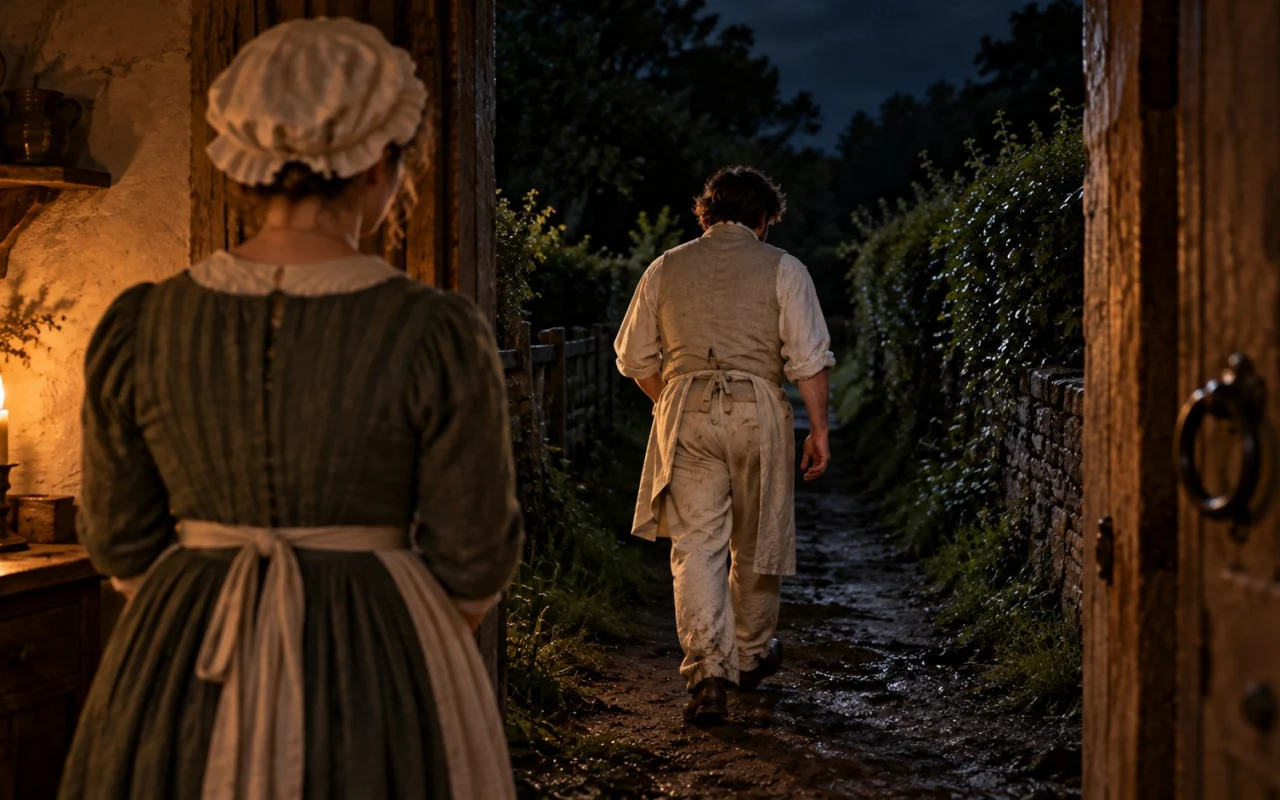
A ghost hunt, a white apron, and a very real mistake
If you were going out to catch a ghost, what would you take?
A lantern seems sensible. A friend would be nice. Francis Smith took a gun, and in Hammersmith on January 3, 1804, a man in white crossed his path. The man was Thomas Millwood, a bricklayer wearing his work clothes. Smith shot him. [S01]
That alone would make a grim little ghost story. Then you reach the trial, where the jury tried to return one verdict and the judge sent them back for another. Suddenly, we’re following two questions: what had people been seeing around Hammersmith, and what should happen to a man who killed someone he said he mistook for a ghost?
The original testimony makes this much more interesting than a quick tale about a fellow in a sheet. There’s a watchman, an earlier chase, a sister waiting for her brother to get home, and a practical suggestion about putting on a coat. Let’s pull up a chair and follow those threads.
Who’s who in the Hammersmith story
A few introductions will help before we follow everyone into the lanes and the courtroom.
Thomas Millwood: the bricklayer who was shot. He was Ann’s brother, the son visiting his parents, and the husband waiting for his wife.
Francis Smith: an excise officer, meaning an officer concerned with government duties or taxes. He carried the gun and became the defendant in the murder trial.
Ann Millwood and her parents: Ann lived with her father and mother in Black Lion Lane. Thomas visited them that night. Ann heard the challenge and shot, then found her brother.
Thomas’s wife: the woman he was waiting for and then went to fetch. Ann placed her at Mr. Smith the out-rider’s; Kirby’s account says she was working at a nearby house. Her occupation is still an unanswered question. [S02]
Mrs. Fulbrooke: a relative of Thomas by marriage, with whom she said he lived. She gave the warning about his white clothes. Her exact family relationship is not specified in the testimony.
William Girdler: the night watchman who met Smith carrying a gun and had previously pursued a white-covered figure. The court record calls him Girdler; Kirby gives his first name.
John Locke: a wine merchant who heard Smith’s explanation after the shooting and went to the body. He supplies an account of what Smith said, rather than a view of the shot being fired.
Thomas Groom and Mr. Burgess: Groom was a servant of Burgess, a Hammersmith brewer. Groom appeared for the defence to describe his own reported choking encounter.
John Graham and his apprentice: Graham was the shoemaker who, according to Kirby’s account, admitted wearing a sheet to frighten his apprentice. That reported confession concerns one prank.
Mr. Smith the out-rider: the person whose household Ann mentioned when explaining where Thomas’s wife was. The record gives us a second Smith reference without identifying him as Francis or establishing a family connection.
The chief baron: the senior judge directing the jury on the law in this trial. The jurors returned the verdict; he explained which legal choices he believed the evidence allowed.
R. S. Kirby: the publisher named on our collection of unusual stories. The Hammersmith chapter has no individual byline. John Wesley, mentioned below, belongs to the earlier religious context, not the cast of the 1804 case. [S10]
Why were people so ready to talk about a ghost?
Imagine hearing about one strange encounter, then another, in places people around you actually used. Girdler described weeks of alarm and people being badly frightened. Groom offered a story involving hands around his throat. Even someone who suspected a prank had a reason to wonder who might be waiting in a dark lane.
The accounts show several explanations living alongside each other. Some people described a ghost. Girdler pursued a figure that could remove its white covering, and Kirby’s writer talked about exposing impostors. People were trying to understand experiences, catch someone, protect themselves, or find out what their neighbors had seen.
Ghost belief also had a place in English religious life before this case. The Museum of Methodism describes the reported 1716–1717 disturbances at the Wesley family’s rectory, where the supposed ghost was nicknamed Old Jeffrey. That is an earlier example from a different place, useful for seeing that spirit stories could belong to religious households as well as popular entertainment.
For Hammersmith itself, the testimony gives us the closer view: a churchyard, familiar lanes, rumours of frightening encounters, and people going out to investigate. A burial ground brought the living close to reminders of the dead. If you already believed a spirit might appear, the setting could make a report especially unsettling. If you thought someone was playing tricks, the same setting gave you a reason to go looking for them.
That mixture interests me. The danger could feel real whether someone expected a spirit or a person hiding under a sheet. When neighbors began searching with weapons, their different explanations were meeting in the same dark places.
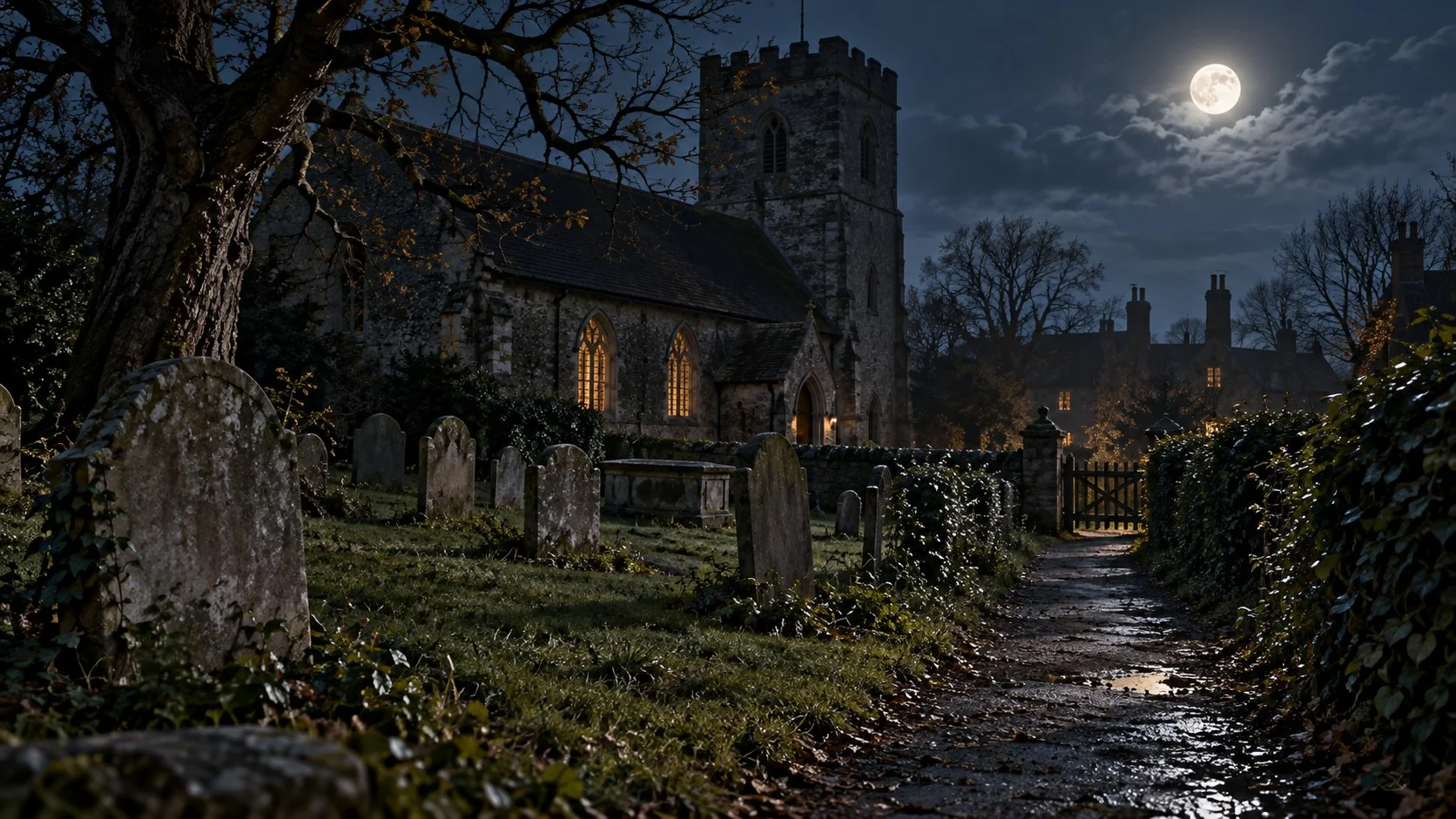
What had Hammersmith been seeing?
One difficulty with a neighborhood ghost is that several very different encounters can end up belonging to the same story. In Hammersmith, we have a white figure being pursued and a man reporting that something had grabbed him by the throat. Were they connected?
The watchman Girdler described chasing a figure wearing a white covering on an earlier night. Thomas Groom was a servant employed by Mr. Burgess, a brewer in Hammersmith. He appeared at Smith’s trial as a witness for the defence, giving an account of his own reported encounter in the churchyard. He said someone came from behind a tombstone and seized his throat with both hands. His fellow-servant, walking ahead, heard the scuffle and called out. Groom said he was twisted around, and when he pushed out with his fist, he felt something soft, like a greatcoat. He hadn’t seen his attacker.
Knowing why Groom was in court adds another question. His story could help the defence show how frightening an encounter in that churchyard might be. Was he describing something that happened, making a frightening experience sound more dramatic, or telling a story that would help Smith? Each possibility changes how we read his account.
The trial gives us a few things to check. Groom placed his encounter between eight and nine at night, but the printed testimony supplies no calendar date for it. He mentioned a fellow-servant who heard the scuffle and called out. That companion is unnamed in his account, and the published record includes no separate testimony identified as coming from him. We have Groom’s description, with that possible second witness still just out of reach.
If we could ask Groom a few more questions, I’d start there: who was walking with him, when did it happen, and whom did he tell afterward? The answers could help us work out how his story reached the courtroom and whether Smith had heard it before he went out with the gun.
That leaves us with quite a question. Who was doing the choking? Someone hiding behind a tombstone could certainly have been trying to terrify a passerby. But grabbing a person’s throat takes this beyond simply standing in a sheet and waiting for someone to jump. Was this another prank taken too far, or an assault that became part of the ghost story?
And what about the possibility people were already talking about: a spirit? If you believed a ghost was abroad, an encounter you could actually feel might have seemed more convincing than a pale figure across the road. Would the touch of something soft suggest a person’s coat to you, or would the whole experience feel even more uncanny?
Another source takes us beyond the courtroom: the chapter “The Hammersmith Ghosts” in volume II of Kirby’s Wonderful and Eccentric Museum, a published collection of unusual stories. The chapter runs from pages 65 to 79. Its title page names the London publisher as R. S. Kirby, but the chapter has no individual byline. We have the account to explore, while the person who wrote it and any personal connection to the people in this case remain unidentified.
The white clothing comes from Girdler’s sighting. Groom described what he felt, without getting a look at who or what had him. Maybe the two encounters were connected. Maybe the neighborhood was giving the same ghost’s name to different experiences. Kirby’s account itself describes more than one supposed spectre.
That’s a thread worth keeping hold of as we follow the story. Explaining one figure in a sheet may still leave us wondering about the hands at Groom’s throat.
On page 77 of that book, the account discusses Groom’s churchyard encounter, then moves on to a later supposed spectre around Beaver, Black Lion, and Plough and Harrow Lanes. It connects the December 29 appearance with the frightened apprentice and Girdler’s chase. The account treats these as different episodes in the neighborhood’s trouble.
That helps us ask a more useful question about the choking: are we trying to identify the same person twice, or looking at two different incidents? Groom’s testimony supplies a physical encounter, a companion who heard the scuffle, and the feel of something coat-like. Graham’s reported confession supplies a sheet, an apprentice, and a reason for one particular prank. We have details to compare, even though the surviving accounts leave the person behind the tombstone unnamed.
A human attacker is one possible explanation for hands and clothing. For someone who believed spirits could make physical contact, those same details might make the encounter more unsettling. The account gives us something specific to discuss either way: what Groom said happened to him, alongside the separate sighting that Graham reportedly explained.
The trouble with perfectly ordinary work clothes
Thomas Millwood was a bricklayer. The trial describes white linen trousers, a flannel waistcoat, and an apron. They were working clothes, but those light-colored clothes mattered in a place where people were looking for an apparition.
Mrs. Fulbrooke gave one of the most telling pieces of testimony. She said Millwood had been mistaken for a ghost before and that she had warned him to wear a greatcoat. She was related to him by marriage, and he lived with her.
I find that coat a fascinating little detail. It brings the whole affair down from a ghostly legend to a conversation you can almost recognize: please put something over those clothes before someone gets the wrong idea. Maybe she thought it would save him another silly encounter. We can wonder how serious she believed the danger was without deciding we know what was in her mind.
There’s also room to wonder about Millwood. If you’d already been mistaken for a ghost, would you think the next person would have a laugh and let you pass? Would you be annoyed that you were expected to dress differently because of other people’s fears? Those are possibilities to think about, rather than words we can put in his mouth.
His sister Ann specifically denied warning him about the white clothes herself. That distinction helps us keep the people in this story separate. The warning belongs to Mrs. Fulbrooke’s testimony. Ann’s account takes us somewhere else.
Mrs. Fulbrooke’s account of that earlier mistake is livelier than a simple warning. She said Millwood told her about two women and a man passing in a carriage. The man called him the ghost, and Millwood answered angrily, asking whether he wanted a punch. She then urged Thomas to cover the white clothes with his greatcoat so he would be safe.
That gives us a different side of him to consider. He had already had to deal with strangers turning his work clothes into a ghost costume. From the way he reportedly answered, the joke seems to have worn thin. It also makes Mrs. Fulbrooke’s advice feel very practical: put on the coat and avoid another encounter. Neither of them needed to believe he looked supernatural to recognize that other people were reacting to him.
Were other men doing the same work? The court treated these as recognisable working clothes: counsel called them a bricklayer’s dress, and Ann agreed. That is a useful clue that Thomas’s appearance belonged to an ordinary trade, rather than a costume he had devised. The record gives us his particularly clean white trousers, waistcoat and apron, but no count of other local men dressed exactly the same way.
The question then becomes why this particular workman, at this particular moment, was treated as the figure Smith was searching for. Poor visibility, the clothes and the expectation of meeting a ghost are possible parts of an answer. Whether Smith recognized him, or had some other reason for firing, deserves to be considered alongside those possibilities.
What did a watchman do?
A watchman was part of the local system for keeping order after dark. Before the Metropolitan Police began in 1829, parishes employed men to patrol at night. The watch could question suspicious people and take apprehended offenders to a watchhouse. Arrangements varied from place to place.
Girdler’s testimony lets us see his work in this neighborhood. He made his rounds and called the hour; Ann heard that call from home. He also said he usually carried a pistol. We can picture a person moving through the lanes whose voice helped residents keep track of the night, and whom someone might seek out when trouble happened.
That explains why Smith spoke to him about searching and why Girdler intended to finish calling the hour before joining him. The ghost hunt was being fitted around his regular duties.
Ann was waiting for a familiar voice
On the night of January 3, Millwood visited his parents while he was waiting for his wife to come home. Ann said their mother was about to go to bed. She offered to sit with Thomas, and they talked while their mother fell asleep. Later, Ann heard the watchman calling the hour and reminded her brother that his wife might be coming home alone. That was what finally got him up and out of the house.
This is the part of the testimony I keep thinking about. Thomas was sitting with his sister, waiting for his wife. Ann’s concern was that she would be walking home by herself. While other people were looking for a ghost, this family was working out the ordinary business of getting everyone home safely.
Ann got up and went to the doorway after Thomas left. She said she heard a voice challenging him and threatening to shoot, then heard the gun and saw its flash. She called his name several times. There was no answer.
Then she tried to get help inside the house. Her father was in bed, and a young man was sleeping in another room. According to Ann, neither would believe her when she said Thomas had been shot. She went looking herself and found him by the gate. In her testimony, she described taking his right hand and asking him to speak to her.
There’s so much in that sequence: the visit, the worry about his wife, the sound outside, then Ann trying to get someone to listen. Her account matters more than any speech we could imagine for them.
It also gives us a little insight into how differently people can respond to the same moment. Ann had just watched her brother leave and heard something frightening almost immediately afterward. The people she woke were being asked to believe that something terrible had happened during the few minutes since he’d been sitting in their home. We can wonder whether disbelief delayed them, while Ann was already putting the sounds together.
The witnesses’ clocks disagree, so their estimates won’t give us one tidy minute-by-minute schedule. Ann’s sequence is still clear enough to follow: her brother was with the family, he left, she heard the challenge and the shot, and she went to find him.
I think going out alone took real courage. Ann had just heard a threat and a gunshot, knew about the ghost talk, and had tried to get help inside. Then she went herself. The way she called for Thomas and took his hand makes their bond feel close to me. We meet a sister determined to reach her brother, even while she was frightened for him.
Where was his wife, and why was she out so late?
Ann placed Thomas’s wife at Mr. Smith the out-rider’s. Kirby’s account adds that Thomas was going to a house in the neighborhood where his wife was at work, to fetch her home. So we do have a period account connecting her late return with work.
Her job is the missing detail. Neither of these accounts names an occupation, says exactly what task she was doing, or gives us a work schedule. A household visit does not by itself tell us whether she was a servant, doing a particular paid job, or working there in some other capacity. That is a useful family-history question to carry into further records.
What Ann’s testimony makes clear is the concern about her coming home alone. Thomas sat with his family while he waited, then got up after Ann urged him to go. That brings us very close to an ordinary evening’s decision, made for someone he cared about.
What could they hear after dark?
Try imagining that doorway for a moment with the television, passing motor traffic, and household appliances taken out of the background. It changes how you think about Ann hearing a voice outside. Her testimony also includes another sound we might forget to listen for: the watchman calling the hour. A person passing the house was helping her judge how late it was.
Now listen to the same evening from Girdler’s point of view. He said he heard the shot just before reaching Black Lion Lane, but took no notice because he heard gunfire so frequently, almost all night. When the court asked him to explain, he confirmed that he meant guns being fired.
That surprised me. We might picture a gunshot breaking a perfectly quiet night and bringing everyone to the door. Here was the watchman saying it sounded familiar enough for him to carry on. The trial doesn’t tell us who was responsible for all those other shots, so that’s another detail worth researching rather than supplying an easy answer.
For Ann, the shot followed a voice challenging someone just after Thomas left. For Girdler, it was another report in a night when he said he often heard them. The sound was important to both accounts, but the situation around it gave each person a different reason to react.
So instead of imagining a silent old world, we can listen for the sounds the witnesses actually mention: the watchman’s call, a voice in the lane, the gun, and Ann calling for Thomas. Those details bring us closer to what they were noticing.
There were guns around them: Girdler said he carried his pistol as a matter of habit, and Smith carried his own gun into the search. Kirby’s account also mentions a drummer belonging to the Chiswick Volunteers among the people alarmed by an appearance. In December 1803, Parliament was discussing the provision of firearms to volunteer corps. That gives us national military context, though it does not identify the people firing the shots Girdler heard. [S09]
The rules also belong to a different time. The Gun Licence Act of 1870 introduced a later excise licensing measure for using guns, with exceptions. It was still decades away in 1804. We should keep that later law separate from this case, just as we should separate carrying a gun from having a lawful reason to fire it at someone. Smith’s trial is a sharp example of that second question. [S08]
Was Girdler hearing other searchers, military activity, or people firing for some other reason? His testimony leaves that unanswered. It tells us what had become familiar to him, rather than giving us a list of who was shooting. That makes his remark a valuable local detail to keep investigating.
What did Smith think he was shooting at?
John Locke testified that Smith told him he had shot a man he believed to be the pretended ghost. Locke described him as extremely agitated. Girdler’s testimony says Smith was out and about with a gun before the shot.
But what if the ghost explanation was an excuse? Maybe Smith was frightened, as he said. Maybe, after shooting Millwood, he reached for a story that could make his actions sound understandable. A neighborhood already talking about a ghost would offer him an explanation people recognized.
Girdler’s testimony gives us something to compare with Smith’s later account. He said Smith had told him he was searching for the ghost before the shooting, when they met with the gun. If we accept that testimony, the ghost search was already being discussed before Millwood died. Then Locke described what Smith said afterward. That helps us separate the earlier plan from the explanation Smith gave once a man had been killed.
It still leaves room to ask how sincere Smith was, what he meant to do if he found someone, and whether fear became a larger part of his explanation afterward. And Groom’s choking story deserves its own examination: it could be true, exaggerated, or invented without every other ghost report having the same answer.
Did the word “pretended” catch your attention too? Were they looking for a spirit, or someone dressed up as one? Those are two very different searches, especially when somebody brings a gun.
What did Smith expect would happen when he found the figure? Would the ghost stop and explain itself? Would a prankster run? Was he expecting to frighten someone into giving up the performance? Smith’s explanation afterward leaves us wondering what he expected before he went out.
There’s a familiar human possibility here: once you’ve decided what you’re looking for, you can become very quick at finding it. It’s like when you get a new or different car and start noticing other people driving one just like yours. Have there always been that many around? Suddenly, you’re noticing them everywhere. Could hearing about a ghost have made people pay the same sort of attention to white clothing? The white clothes were real. The story attached to them was the dangerous part. Millwood was dressed for the work he did, while Smith was searching for something else.
Fear can feel very convincing. It’s one reason these old accounts still hold our attention. We can imagine being unsettled by a strange encounter, then ask where the moment came when being unsettled turned into taking aim.
The darkness makes that question more practical. Locke described a lane enclosed by hedges, about twelve feet wide, and said it was so dark that a person on the other side would be hard to make out. That’s a narrow space in which to be uncertain who is approaching you. Pale clothes might stand out while the person wearing them remained difficult to recognize.
Girdler and Smith had even discussed how to recognize each other if they met while searching the lanes. Girdler said they agreed on a challenge and answer: asking who was there, answering “Friend,” then inviting the friend to advance. He planned to join Smith after calling the hour.
That little arrangement tells us they had already thought about meeting someone in the dark. It also helps explain why an answer mattered so much in the accounts. Locke said Smith told him he had called twice and received no reply. Ann described hearing a challenge followed by the shot. We have two accounts of that exchange to consider, coming from different positions: Smith’s explanation afterward, passed on by Locke, and the words Ann heard from near her doorway.
When you put those details together, the search feels much less abstract. There were hedges, poor visibility, a gun, and an agreed way of announcing yourself. What happened when a person approaching wasn’t part of that agreement?
Was Smith waiting for Thomas, and how close were the houses?
The timing makes you wonder. Thomas had just left his parents’ home when Ann heard the challenge and shot. Could Smith have known who was visiting and waited for him? That is a possible reading to test, rather than something the timing alone settles.
Ann was asked whether Smith and Thomas had any animosity between them. She said she did not know. Her answer gives us no established quarrel, but it also gives us no assurance that they were strangers or had never had a disagreement. Girdler’s account of the earlier ghost-search conversation and Smith’s explanation afterward are other pieces to weigh.
The places we can name are more limited than an exact route on a map. Ann said her parents lived in Black Lion Lane. She described finding Thomas by a gate when she had gone about halfway between her father’s home and her brother’s. Locke described the body in a cross lane linking Black Lion Lane and Beaver Lane. These accounts put the family, the lane and the gate near one another in the events she described. They give us no measured distance between the two homes.
The churchyard belongs to Groom’s encounter; the fatal shooting is described in the lanes. The record does not identify a precise shooting spot or the two house plots well enough to measure the distance to the churchyard. A modern map could make the answer look more exact than the evidence allows.
What we do have is a small local network of homes, lanes and public houses, with a man leaving his family and a gunman already out searching. It is worth asking whether they crossed paths by chance or whether Smith knew more than he said. The surviving testimony leaves that as a question for us to examine.
The jury tried to choose manslaughter
At the Old Bailey, the jury’s first answer was manslaughter. The chief baron refused to accept it and directed them toward murder or acquittal. The jury then returned a guilty verdict, and Smith was sentenced to death.
In this court, the judge explained the law, could question witnesses, and summed up the case; the jurors returned the verdict. Juries of that period were made up of men who met property qualifications. [S06]
For an American reader, one part is familiar: modern U.S. federal courts also describe the judge as explaining the law and the jury as deciding the facts. That broad division does not make every procedure the same. Here, we are following what this judge told this jury in 1804, including his refusal to accept manslaughter. [S07]
Why couldn’t they choose manslaughter? The trial records the judge saying that he saw no circumstance in the case that would reduce the killing to that offense. He told the jurors that if they disbelieved the prosecution witnesses, they could acquit Smith. If they believed them, they had to convict. He also said that mercy belonged to the Crown.
That last point helps us understand the exchange. In the judge’s explanation, deciding whether the evidence proved the killing and deciding whether Smith should receive mercy were different jobs. The jurors tried to return a lesser verdict; he directed them back to the evidence and left mercy to the royal authority.
Smith’s own defense asked the court to consider his fear and agitation. He said he had gone out with a good intention and had not intended to take Millwood’s life, or anyone else’s. The trial also records twelve witnesses called to speak for his character. Locke and Girdler described him as mild or good-tempered.
Imagine listening to all of that in one room. A man has been killed. His sister has described finding him. Other people are telling you that the man who shot him is usually kind and mild-tempered, while he says he never meant for this to happen. You can understand how the first verdict invites us to wonder what the jurors were trying to express.
The surviving accounts disagree about how long that first deliberation took. What we do have is the sequence of verdicts, followed by the judge’s explanation of the choice he would accept.
Would you have thought about Smith’s character, the fear in the neighborhood, or the decision to take a loaded gun into the search? And how would you have weighed those things alongside Ann’s account?
A death sentence was not the end of his story
If we stopped at the death sentence, we’d leave Smith’s story unfinished. The Digital Panopticon, which brings together linked criminal records, indexes a respite of his sentence on February 2, 1804, and remission of his prison sentence on July 12. [S03]
Those entries give us a later trail to follow beyond the trial’s dramatic ending. They’re the archival index’s dates, rather than a diary of each day Smith spent in custody, but they show why the sentence alone isn’t the whole outcome.
There is something striking about the way this case shifts as we move through its records. First there is a ghost to catch, then a death to explain, then a verdict to decide, and finally a sentence whose course changes. Each stage asks a slightly different question about the same night.
For Millwood’s family, of course, the later decisions couldn’t bring him home. Ann’s account remains part of the story whatever happened to the man who shot her brother.
So who was under the sheet?
Here comes the detail you may have been waiting for. Kirby’s account reports that John Graham, a shoemaker, confessed to dressing in a sheet on December 29 to frighten his apprentice. The apprentice, according to the account, had been frightening Graham’s children, and Graham decided to give him a taste of the same thing.
As a plan for teaching someone a lesson, that has a certain unfortunate circular logic. You’re annoyed by ghost tricks, so you put on a sheet and perform a ghost trick. What could possibly go wrong?
The book’s account places that prank before Millwood’s death. It’s a reported explanation for one appearance, and it gives us a wonderfully human possible ingredient in the neighborhood mystery: a household quarrel that wandered outdoors wearing a sheet.
It also invites a bigger what-if. What if Graham expected his audience to consist of one apprentice, while other people were already primed to see something much more alarming? A private joke can collect an audience its inventor never planned for.
But Groom’s choking encounter is still waiting for an explanation. Who reached around his throat? Graham’s reported confession concerns the sheet prank aimed at his apprentice; it leaves that churchyard encounter unanswered. The soft material Groom felt might fit a human attacker wearing a coat. Could it have been a different prankster, someone using the ghost stories as cover for an assault, or something Groom would have understood as a spirit?
And if the person who grabbed him was also the white-clothed figure, how would we connect those two encounters? Groom never got a look at his attacker, so that connection remains a possibility for us to explore. Kirby’s account describes more than one supposed spectre, which makes me wonder whether several quite different things had become tangled together under the Hammersmith Ghost’s name.
Even then, people were arguing about the story
You might expect the older account to give us one neat version before later storytellers embellished it. Instead, Kirby’s account is already arguing with other versions. It rejects reports that a woman had died of fright and that a horned, skin-clad figure had been roaming about.
So the disagreement isn’t something we’ve arrived two centuries later to add. People were already sorting, denying, explaining, and retelling the Hammersmith ghost.
That gives us another layer to explore. How much of a legend grows from an encounter, and how much grows from the conversation afterward? Groom described something happening to him, not simply a figure glimpsed at a distance. His account deserves a place of its own alongside the sightings and the reported sheet prank.
There’s so much to explore here. What happened to Groom in that churchyard? Could his encounter be connected to the figure in white, or was something else going on? I wonder which part of this story would have stayed with you if you’d lived in Hammersmith. Would you have gone looking for the ghost, or hoped someone else found it first?
An evening that should have ended at home
For me, Thomas comes across here as a good man caught in a terrible moment. He had work, a wife and family nearby. That evening, he sat talking with his sister while he waited for his wife, then left after Ann worried about her walking home alone.
That is what makes the ending so painful. Going to make sure someone you love gets home safely is such an ordinary, caring thing to do. We can recognize it across all those years. The evening should have ended with a closed door and everyone home.
What if Thomas had stayed in that night and waited for her? What if he had stayed a little longer with Ann? We can imagine those small changes because the testimony has let us sit with the family before he left. His death interrupted a life made up of work, conversation and concern for the people around him.
And Ann went out to find him. Her courage belongs in this story alongside the ghost reports, the unanswered questions and the trial. When I picture the end of that night, I think of a sister calling her brother’s name and taking his hand.
Which detail stays with you: Thomas leaving to fetch his wife, Ann going after him, or how close this family came to having an ordinary night at home?
Sources and evidence notes
- S01 · Francis Smith trial: witness testimony, defence and jury verdictOld Bailey Proceedings Online; 1804-01-11
Research notes
139. FRANCIS SMITH was indicted for the wilful murder of Thomas Millwood .
JOHN LOCKE sworn. – Q. Where do you live? – A. At Hammersmith.
Q. What is your profession? – A. A wine-merchant.
Q. Do you know any thing of the manner in which the deceased came by his death? – A. On the 3d of this month, at half past ten at night, I met Francis Smith ; he informed me he had shot a man, who he believed to be the pretended ghost of Hammersmith .
Q. There had been such a rumour, had there? – A. For a considerable time; I went with him, and the watchman.
Q. Did the watchman come up to you? – A. The watchman was in company with me; we went up Cross-lane.
Q. All three of you? – A. Yes, and Mr. George Stowe with us; it is a cross lane that crosses Black Lion-lane and Beaver-lane; we saw the deceased lying apparently dead; Mr. Stowe consulted what was to be done with the deceased; we sent for the high-constable, and ordered him to come down to see what was to be done.
Q. What appearance had the body of the deceased? – A. No appearance of life.
Q. Did you observe the head, or any part of the body? – A. I observed the head; it appeared to be shot on the lower part of the jaw on the left side.
Q. What did the prisoner say? – A. He seemed very much agitated; I told him what I thought of the consequence of firing; he said, he had fired, and did not know it was that person; it was an extreme dark night; the prisoner appeared very much agitated, and I advised him to go to his lodgings.
Q. Did he say any thing had passed between him and the deceased? – A. He said he had spoke to him twice, and received no answer.
Cross-examined by Mr. Const. Q. You have said there had been some talk about a ghost? – A. Yes, for some time, I suppose for five weeks previous to that.
Q. Had you, among others, ever seen the figure? – A. No, I had not.
Q. You know, I believe, however unfortunate it has turned out, that almost all the young men had gone out? – A. Yes, several parties had gone out.
Q. Which was publicly known and talked of? – A. Yes.
Q. The dress of the phantom had also been described? – A. Yes, and corresponding very much with the dress of the deceased.
Q. What was that dress? – A. Linen twowsers entirely white, washed very clean, a waistcoat of flannel, apparently new, very white, and an apron, which he wore round him; his trowsers came down almost to the edge of his shoes.
Q. What was he? – A. A bricklayer , I am informed, I did not know him.
Court. Q. What was reputed to be the appearance of the mischievous person? – A. In white sometimes, and sometimes in the skin of a beast; a calf skin, or something of that sort.
Mr. Const. Q. From the communication of the prisoner, you knew of the unfortunate accident? – A. Yes.
Q. You observed he was in great trepidation? – A. Yes, wonderfully so; so much so, that he could hardly speak.
Q. Do you recollect whether, in the disclosure, he told you of the conduct of the deceased, and what he did? – A. He said he advanced to him, and irritated his fears, or something of that sort.
Q. That he called twice, and the figure advanced to him, and raised his fears more? – A. Yes, and which was the case certainly.
Q. This lane is described as a very dark lane? – A. Yes, very dark.
Q. And it was a very dark night? – A. Yes.
Q. I understand the lane is inclosed between two hedges? – A. Yes, and if it was a light night, it would be dark in the lane, though it is not wider than from me to you, (about four yards,) you could not perceive any body on the other side of it.
Q. The prisoner, I understand, is in the Excise? – A. He is.
Q. You have known him some time? – A. I have; he lives just by me.
Q. Did he surrender himself afterwards? – A. Directly; I advised him to go to his lodgings; he went, and afterwards when they called to him, he came down directly, but he wished to surrender himself in the first instance; he said first, I wish you would take me into custody, or send for somebody.
Q. What is his disposition? – A. A very mild one.
Q. And a man of humanity? – A. Yes.
Q. Generally esteemed? – A. I don’t know any one that has any reason to say any thing against him; he is generally liked.
– GIRDLER sworn. – Q. You are a watchman at Hammersmith? – A. Yes.
Q. You went with Mr. Locke on the 3d of this month? – A. Yes.
Q. Tell me what you observed with respect to the deceased? – A. I saw him laying upon his back in the lane.
Q. In what condition was he? – A. Laying on his back quite straight.
Q. What did you observe with regard to his person – did he appear to be alive or dead? – A. He was quite dead.
Q. Did you observe any wound about him? – A. No farther than in the jaw.
Q. What sort of wound? – A. Just on the left side; it appeared as if it was done by the shot.
Q. Tell me every thing you heard and saw? – A. I was called by Mrs. Honor at the White Hart, and Mr. Smith came up there, after he had shot the man.
Q. Was that the occasion of your going to the place where the man was shot? – A. Yes.
Q. What did he say or do? – A. We met Mr. Locke and Mr. Stowe at the corner of Black Lion-lane; I went down with Mr. Smith.
Q. What did Smith say to you when he came there? – A. He said he had hurt the man; I said, I hope you have not hurt him much; says he, I have, and I fear very bad.
Q. You, and Mr. Locke, and Mr. Stowe, went to the deceased? – A. Mr. Smith and I went first, and Mr. Locke and Mr. Stowe came up immediately after.
Q. Did Smith desire you to go? – A. Yes.
Q. What passed when you came to the place where the deceased lay? – A. Nothing passed then.
Q. Did the prisoner say any thing? – A. I don’t remember his saying any thing farther about it.
Q. What did you do when you got there? – A. Carried him to the Black Lion.
Q. Had you any meeting with the prisoner in Beaver-lane that night, or any night before? – A. I met him at the corner of Beaver-lane that night, and he said he was going to search after the ghost.
Q. What time was it you met him there? – A. About half past ten; I said, I would come round after I had cried the hour, and search the lanes, and we would take him if possible; we agreed, if we met in the lane, to say who comes there? Friend. Advance, friend.
Q. What did you do? – A. I went upon my own business.
Q. Did you hear the gun fired? – A. Yes, just before I came to Black Lion-lane.
Q. What did you do on hearing the report? – A. I did not take any notice of it, because I hear them every quarter of an hour, almost all night.
Q. Do you mean you hear guns fire frequently in the night-time? – A. Yes.
Q. What did you do then? – A. We took the body to the Black Lion.
Q. Did you meet any young woman as you were going to the White Hart? – A. No.
Q. You said before the Justice that you did? – A. Mrs. Honor’s maid came with a candle, and called me, and said, I was wanted to go along with Mr. Smith.
Q. Did you see the prisoner with a gun in his hand any time that evening? – A. He had a gun in his hand when I met him at the corner of Beaver-lane.
Q. When you came to the body of the deceased, did you see a gun there? – A. No.
Q. Did he say any thing about delivering himself up? – A. He told Mr. Locke and Mr. Stowe he would deliver himself up immediately.
Cross-examined by Mr. Gurney. Q. When he told you he was going to look after the ghost, were you armed? – A. I had a pistol with me, as I always have.
Q. Was it dark? – A. It was very dark.
Q. Had you heard the rumour of the appearance of a ghost? – A. Yes, I had seen it myself the Thursday before.
Q. What day did this accident happen? – A. On Tuesday.
Q. What appearance had it when you saw it? – A. It had a white sheet or table-cloth, I cannot say which.
Q. How near to Beaver-lane? – A. It was the other side of the lane.
Q. Near Beaver-lane? – A. Yes, just opposite the four-mile stone.
Q. Did you pursue it? – A. Yes.
Q. When you pursued it, how did it escape? – A. Slipped the sheet or table-cloth off, and then got it over his head; it was just as if his head was in a bag.
Q. How long had the neighbourhood been alarmed with its appearance? – A. About six weeks or two months.
Q. Was the alarm great and general? – A. Yes, very great.
Q. Had considerable mischief happened from it? A. Many people were very much frightened.
Q. Do you know of any mischief that happened to any woman by it? – A. I have heard tell of it, but I don’t know it.
Q. There was a rumour of mischief having occurred from it? – A. Yes.
Q. Have you known the prisoner for sometime? – A. Yes.
Q. What character has he borne? – A. Always a very good-tempered young man.
Q. Nothing like a man of a cruel disposition? – A. No.
ANN MILLWOOD sworn. – Q. With whom do you live? – A. With my father and mother, in Black Lion-lane.
Q. The deceased was your brother, I believe? – A. Yes.
Q. Be so good as tell the Jury what you know relating to this melancholy affair? – A. Between ten
and eleven o’clock, my brother came to my father’s house; he had been to see for his wife, who was at Mr. Smith’s, the Out-riders; my mother and I were just going to bed when he came in; he said, mother, are you going to bed? I made answer, yes, Thomas, is your wife come home? he said, no, she will not be at home for half an hour; I said, will you come in, and I will sit with you? he came in, and I sat with him; we talked a considerable time, till my mother fell asleep; while my brother was sitting, I heard the watchman crying past eleven o’clock, as I thought; I told my brother, your time is expired, you had better go; he did not attend to me, but set for a considerable time; I said, you had better go, it is dangerous for your wife to come home by herself; he jumped up, and said, I will go; he bid my mother and me good night, and went out of the door, and shut it. As soon as he was gone, I jumped up, and went to the door; as soon as I got to the door, I heard a voice say, d – n you, who are you, and what are you, d – n you, I will shoot you? and whilst they were speaking, the gun went off, and I saw the flash of fire from the gun; I went from the door, and called Thomas, as loud as I could, three or four times, but nobody answered. I went into my mother, and said, I do think my brother is shot; I did not stay for an answer, but went up to my father, who was in bed, and said, do get up, for my brother is shot; he would not believe me, and then I went into a room adjoining, and awakened a young man; he would not believe me neither; I went to the window, and called Thomas, as loud as I could call. At last I said, well, if nobody will believe me, I will go myself; I ran out of the door, and when I had got half way from my father’s house to my brother’s, I saw my brother laying dead at the gate; I took hold of his right hand, and said, speak to me, but he could not, for he was quite dead; his head was laying towards me, as I went up to him.
Q. Who was there at the time? – A. Nobody, I was by myself, I saw nobody; when I saw my brother, I don’t know whether I went home directly, or not, but I run to Mrs. Wells afterwards, if I did.
Cross-examined by Mr. Const. Q. You saw the prisoner afterwards with Mr. Locke? – A. Yes; when I came back from Mrs. Wells, I saw Mr. Locke, Mr. Gilbert, Mr. Stowe, and Mr. Smith, with my brother; that was as I was coming back from Mr. Wells’s, where I went.
Q. Had they a lantern? – A. I don’t know, I believe they had.
Q. You say your brother shut the door after him? – A. Yes.
Q. You did not go out exactly at the same time? – A. I got up directly out of my chair, and got upon some bricks adjoining the door; I heard the words spoke.
Q. When you were out of the door? – A. Yes, and when I was upon the bricks before the door.
Q. The dress he had on, was a bricklayer’s dress? – A. Yes, his working dress.
Q. You must have heard of this ghost? – A. Yes, I heard great talk of it, that sometimes it appeared in a white sheet, and sometimes in a calf-skin dress, with horns on its head, and glass eyes.
Q. Did it ever occur to you to mention any thing to your brother about his dress? – A. I often spoke to my brother, and asked him, if he saw it, should he be afraid, and he said, yes.
Q. As he was dressed in white, did it happen that you cautioned him about going in that dress? – A. No, I never did, because I never had any such thought of him.
Q. I only mean, as to his being in danger? – A. No.
Q. I don’t mean to have it supposed your brother was guilty of it, but as every body was out to take the ghost, did you mention his being in white to him? – A. I did not know it.
Q. You never had any conversation about it? – A. I heard that some people had seen it, but I don’t know any thing of it.
Q. Had Smith and your brother any animosity against each other? – A. I don’t know, it is impossible for me to know.
– FLOWER sworn. – Q. Did you examine the body of the deceased? – A. Yes; I saw the body the day after the accident, and examined it on the 6th, by order of Mr. Hodgson; it had a gunshot wound on the left side of the lower jaw with small shot, about the size No. 4, one of which had penetrated the virtebre of the neck, and injured the spinal marrow, which has a communication to the brain; I examined the brain, but there was no injury whatever to the brain itself.
Q. What is your opinion with regard to this wound having been the cause of his death? – A. I have no doubt that it was the cause of it; it is what we call necessarily, a mortal wound.
Q. What appearance was there of this having been given by a gun-shot, besides the spinal marrow being touched? – A. It had broke the jaw, and the face was black.
Cross-examined by Mr. Gurney. Q. Did you know any thing of Smith before? – A. I did not; but the character I have heard of him is very good, far from being a vindictive man; on the contrary, a very mild man.
– BROOKS sworn. – On Tuesday, the 3d of January, just before ten o’clock, I took the body of the deceased to the Black Lion; Mr. Stone told me, I must go along with him, and Millwood,
the father; going up a lane, they said, we are going to take the man that shot the other; we went up to the door, and knocked; upon which, Smith looked out of the window, and came down immediately, and surrendered himself; I had him two days and nights in my custody.
Prisoner’s defence. My Lord, I went out with a good intention, and when this unhappy affair took place, I did not know what I did; speaking to the deceased twice, and he not answering, I was so much agitated, I did not know what I did; I solemnly declare my innocence, and that I had no intention to take away the life of the unfortunate deceased, or any other man whatever.
Evidence for the Prisoner.
Mrs. FULBROOKE sworn. – Examined by Mr. Const. Q. Are you related by marriage to the deceased? – A. Yes.
Q. Have you heard any conversation at Hammersmith about the ghost? – A. Yes.
Q. In consequence of what you heard about it, did you ever say any thing to the deceased about the dress he wore? – A. On Saturday evening, he and I were at home, for he lived with me; he said he had frightened two ladies and a gentleman who were coming along the terrace in a carriage, for that the man said, he dared to say there goes the ghost; that he said he was no more a ghost than he was, and asked him, using a bad word, did he want a punch of the head; I begged of him to change his dress; Thomas, says I, as there is a piece of work about the ghost, and your cloaths look white, pray do put on your great coat, that you may not run any danger; I don’t know what answer he made; he said he wished the ghost was catched, or something of that sort.
THOMAS GROOM sworn. – Examined by Mr. Gurney. Q. Are you servant to Mr. Burgess, a brewer, at Hammersmith? – A. Yes.
Q. Have you heard any thing of this appearance of a ghost? – A. Yes, I heard great talk of it.
Q. Was it your misfortune to be hurt by it? – A. Yes; I was going through the church yard between eight and nine o’clock, with my jacket under my arm, and my hands in my pocket, when some person came from behind a tomb-stone, which there are four square in the yard, behind me, and caught me fast by the throat with both hands, and held me fast; my fellow-servant, who was going on before, hearing me scuffling, asked what was the matter; then, whatever it was, gave me a twist round, and I saw nothing; I gave a bit of a push out with my fist, and felt something soft, like a great coat.
The prisoner called twelve witnesses, who gave him a good character.
The Jury retired for about three quarters of an hour, when they returned a verdict of Manslaughter. The Lord Chief Baron informed them, that according to law, he could not take that verdict, as they were not at liberty to find it; that they must either find the prisoner guilty, or not guilty, generally, there being no circumstance in the case that could reduce it to manslaughter. If they could say, upon their oaths, they did not give credit to the witnesses for the prosecution, then they might find the prisoner not guilty; if they could not say so, then they must convict him, and the prerogative of shewing mercy lay in the Crown.
The Jury immediately pronounced the prisoner
GUILTY , Death , aged 29.
First Middlesex Jury, before the Lord Chief Baron.- The Old Bailey proceedings record Francis Smith charged with the wilful murder of Thomas Millwood; testimony places the shooting in Hammersmith on 3 January 1804. (fact).
- John Locke testified that Smith told him he had shot a man he believed to be the pretended ghost; Locke described Smith as extremely agitated. (contemporary_report).
- The trial describes Millwood as a bricklayer wearing white linen trousers, a flannel waistcoat and an apron: his working clothes. (contemporary_report).
- Watchman Girdler testified that Smith was carrying a gun and that he later heard a shot; Girdler also described pursuing an earlier figure in a white covering. (contemporary_report).
- Ann Millwood testified that her brother visited their parents, then left for home; she heard a challenge and a shot, went looking, and found him dead by a gate. (contemporary_report).
- Mrs. Fulbrooke testified that Millwood had previously been mistaken for a ghost and that she warned him to wear a greatcoat; Ann denied having given him such a warning herself. (contemporary_report).
- Thomas Groom testified that someone grabbed his throat near a tombstone, but said he saw nothing and described something soft like a greatcoat. (contemporary_report).
- The trial records an initial manslaughter verdict, the chief baron directing the jury to return murder or acquittal, a subsequent guilty verdict and a death sentence. (fact).
- Witness clock times and the two accounts of jury deliberation duration do not agree; the trial also leaves alleged earlier apparitions unresolved. (unknown_disputed).
- Kirby’s Hammersmith account says Millwood was going to fetch his wife from work at a house in the neighborhood; Ann’s trial testimony places her at Mr.Smith the out-rider’s, without naming her occupation. (contemporary_report).
- S02 · The Hammersmith Ghosts, Kirby’s Wonderful and Eccentric Museum, vol. IIR. S. Kirby, London; digitized by University of Illinois; page: 65-79
Research notes
THE HAMMERSMITH GHOSTS.
Being ini authentic and particular Account of that mysterious and complicated
Affair ivhiph has excited so much Curiosity and Conversation $ the Characters
yand Appeafajicjes of the supposed Spectre, the Cbcmnstances that led to the
DeathofTHOMAS MILLWOOD j the Trial of his Murderer> 8$c. fyd
HAMMERSMITH, it appears, has been disturbed for some
months past, b y more than one supposed spectre, to the
great annoyance of the male and female inhabitants.—la
t h e c h u r c h y a r d , and several of the avenues about the
place, it seems that various persons had been very much
alarmed, b y what they understood to have been super
natural beings, which had of course filled the minds. of
numbers with a variety of apprehensions ; and these, a p ^
pearances latterly became particularly troublesome in the
lower p a r t o£the town, near DorveliVrow. Several of the
inhabitants, aware of the imposture, during this time, ha$
given themselves much trouble to detect it, but without
success.—But on the night of Tuesday, January 3 , Francis
Smith, an exciseman, who lodged at M r . . Oakley’s ad^
* The poor youth of Ednam, having a poition of this gift, has published
some very pretty verses, and in commiseration of his ease,, some well-disposed
persons have lately opened a subscription for his benefit. ‘ ‘
VOL. I L K joiningjoining the W h i t e H a r t , in H a m m e r s m i t h ; being at that
house on the same evening, an$ we may suppose^ warm
over his liquor, wrought himself u p to the resolution of
going in quest of the ghost.—Unhappily supposing some
thing more substantial than a mere airy form, he loaded a
g u n , and sallied out with William Girdler, the watchman
of that part of Hammersmith, who had previously agreed
upon a pass-word’, whereby they might distinguish „ each
u n
other, which w a s — ” W h o comes there ?” A friend.
” Advance, friend.” Girdler then continued upon his r e
gular beat, while Smith, that evening, went down Black
Lion-lane. T h e circumstances that immediately followed,
r
w e cannot exhibit in a clearer point of view, than t h a t of
the ensuing evidence given before the Coroner, and upon
the trial. It, appeared before the Coroner, that Smith
took his station m Black Lion-lane, one of the places where
the ghost used to make his escape when hard pressed b y
his pursuers. H e had not long been in waiting before he
fancied he saw the wishechfor object. A figure dressed in
white (that is, Thomas IVIillwood, the plaisterer, in a white
jacket and trowsers) approaching, Smith fired, and the
mistaken object fell to the ground. Millwood was then on
his way to a house in the neighbourhood, where his wife
was at work, to fetch her home, which his sister also r e
lates upon the trial:—She said her brother was about 23
years of age^ and was a plaisterer b y trade. O n the even
ing of Tuesday last, he was at the house of his father, in
Black Lion-lane, with whom the witness resides. H e left
the house between ten and eleven o’clock, and the witness
being almost immediately struck with a presentiment that
some accident would befal him, she accordingly went to
the door, and stood on some bricks, in order to look out
c
for him. She then heard a voice say, * D — n y o u , who
are you ?—Stand, else I’ll shoot you !” and the report of
a gun immediately succeeded. H e r brother was perfectly
sober*sober. T h e neighbourhood had for about two months been
disturbed with the report of a g h o s t ; but she did noi b e
lieve, nor had ever heard, that her brother had assumed
such an appearance.
Mr. J o h n Lock, wine merchant, in Black Lion-lane, H a m
mersmith, said, that as he was returning home from the Plough
and Harrow, on the evening of Tuesday last, about half past
10 o’clock, in company with Mi*. Geo. Stow, he was accosted
b y Francis Smith, one of his Majesty’s officers of excise,
who asked to speak with him. U p o n going aside, Smith
informed him that h e had shot a inan, who he believed to
be the ghost. T h e witness informed Mr. Stow of the cir
cumstance, and t h e y . accompanied Smith to the place.
T h e y found the deceased lying in a cross lane leading from
Beaver-lane to Black Lion-lane, upon his baqk, apparently
dead. . T h e wound was under his left under j a w , and the
skin of his face was exceedingly black. Smith did not a p
pear sensible that he had done any thing wrong, till the
witness warned him of the consequences of such a step.- H e
then seemed m u c h affected, and said, that he had spoken
twice, but had received no answer, and that the night wa§
very dark,
William Girdler, a watchman, said, that he had a slight
acquaintance with the deceased. T h a t the neighbourhood
had been much alarmed for two months past, with the r u
mour of, a ghost walking through Black Lion-lane. T h a t
h e went his rounds as usual on Tuesday evening last. T h a t
h e had appointed to meet with Francis Smith, in Order to g o
in search of the ghost. T h e y had exchanged a watch
word, which they were to use.—When the witness came
near Mr. Stow’s house he heard the report of a g u n , and a
few minutes afterwards, as he was going to the W h i t e H a r t
public-house, he met a young woman, who told him that
h e was wanted. Having gone on a little way, he met
Smith, and asked him what intelligence ? Smith answered,
K 2 veryv e r y bad. T h e y then met Mr. Stow, and w e n t to the place
w h e r e the deceased lay. Smith said that he would deliver
himself u p ; that he had spoken to the deceased twice be*
fore he fired, but he would give him no answer.
T h e Coroner summed tip the evidence with great ability
and h u m a n i t y ; when the J u r y , after some deliberation,
returned a verdict of Wilful Murder. A warrant was then
made out, and Smith committed to N e w g a t e .
. O n Friday, J a n . 13, he took his trial at the Old Bailey,
being charged with Wilful Murder.”
T h e first witness called, was Mr. John Lock, who added
very little to what he had said before the Coroner, excepting
that he consulted Mr. $tow, who was with him, going to a
cross lane,-called Lime-Kiln-lane, what was best to be done
with the b 6 d y . T h e y sent for the high constable of t h e
parish, and it was agreed to remove the body t o the Black
Lion public-house. It.was evident, upon examining the d e
ceased, that the head was shot just below the lower j a w on
the left side.—The prisoner, then he said, wished to surren-*
der himself into the hands of justice ; but the witness ad*
vised him to go home to his lodgings,
M r . Lock, on his cross-examination b y Mr. Const, Counsel
for the prisoner, said^ that the neighbourhood of Hammer
smith had been much alarmed for upwards of five weeks
previous to the death of Millwood, by means of a supposed
ghost. H e had, however, never seen any such appearance,
b u t believed parties went out for, the purpose of appre^
bending the person who was assuming the character.—*
T h e night was extremely dark, and the lane in which the
unfortunate affair occurred, so much so, that a person could
not be perceived on the opposite side of it. T h e witness
said that he had known the prisoner some time ; his dispo
sition was exceedingly mild and generous, and he was
very much liked in the neighbourhood.
William Girdler, the watchman, corroborated the account
givengiven b y Mr. Lock, as to the manner in which t h e de-P
ceased was found, and stated that the prisoner and himself
parted about half past ten o’clock. J u s t after they parted,
he heard the report of a g u n , but did not attend to it, having
been in the habit of hearing guns frequently fired in t h §
night. After he had gone his rounds, he went t o M&y
Horner’s, t h e W h i t e H a r t public-house, where t h e servant
girl came out to him, and said that Smith wanted him, who
told him that he had hurt a m a n ; the witness said h e
hoped not much. Smith replied, that he was afraid h e ha*$
h u r t him very bad,
O n his cross-examination b y Mr, G u r n e y , Counsel for
t h e prisoner, he said, he heard of t h e rumour of a ghost,
and had seen it himself on the Thursday preceding the a c
r
cident. It w as standing on t h e opposite side of the road near
t o Beaver-lane, and was covered either with a large sheet*
or tablecloth, H e pursued it, and the figure fulled off t h e
covering and ran away. T h e prisoner he described as a good-
tempered young man, certainly not of 3, cruel disposition.
A n n Millwood, a very genteel y o u n g woman, sister of
the deceased, stated, that her brother was at her father’s
house about eleven o’clock on Tuesday evening, the 3 d of
J a n u a r y . His wife was absent from home, having gone t a
Mr, Smith, t h e out-rider ; her motherland the family were
going to bed, and she requested that he would go and fetch
home his wife. H e was going to bed himself, but at their
intreaties got u p and left the house for that purpose. She
then repeated the same circumstances which were detailed
before the Coroner.
Mr. Flower, surgeon, stated, that he examined the body
of the deceased, b y order of the Coroner, on the 6 t h of
January, H e found & gun-shot wound on the left side of
the face, just below the under j a w . T h e r e were some
small shot lodged in his neck, the size appeared about
N o . 4 , the shot penetrated the vertebra of the neck and
injuredinjured t h e spinal marrow. T h i s , no doubt, in his mind*
liad occasioned his death. T h e deceased’s face was e x
ceedingly black, and was so in consequence of the powder
^ h i q h had lodged in it. This gentleman also gave Smith
a good character, and said his disposition was far from
being vindictive. ,
William Brooks, the constable, stated his apprehension
of Smith at his lodgings, who had voluntarily come down
when he knocked at the door, and surrendered himself-—
| I e also b o r e testimony to his good character 5 and here t h e
evidence for the prosecution closed.
T h e Lord Chief Baron then informed the prisoner, that
h e might oifer any thing he had in his defence to the
charge.,
T h e prisoner saying he left his defence to his Counsel;
T h e Lord Chief Baron informed him, that his Counsel
could only examine the witnesses, and that if he wished to,
say any thing, he must address the Court himself.
T h e prisoner then, in extreme agitation, said, that when
h e went out from home, it was with a very good intention;
intention of finding out the person who had alarmed t h e
neighbourhood, by assuming a supernatural appearance ;
that meeting with the deceased, and having called to him
twice,, and not receiving an answer,, he was very much
frightened, and knew not what he did. H e must most
solemnly declare his innocence with respect to any inten
tion of taking away the life of the unfortunate m a n , or any*
m a n whatsoever.
His Counsel then proceeded to call the witnesses on his
behalf > the first,
Mrs. Fullbrook, a relation of the deceased, stated, she
resided in t h e same house with him \ and on Saturday p r e
ceding his death, being at home together, he informed her,
that t w o ladies and a gentleman, on account of t h e dress
h e wore, had been frightened at him on the T e r r a c e , —
Onec
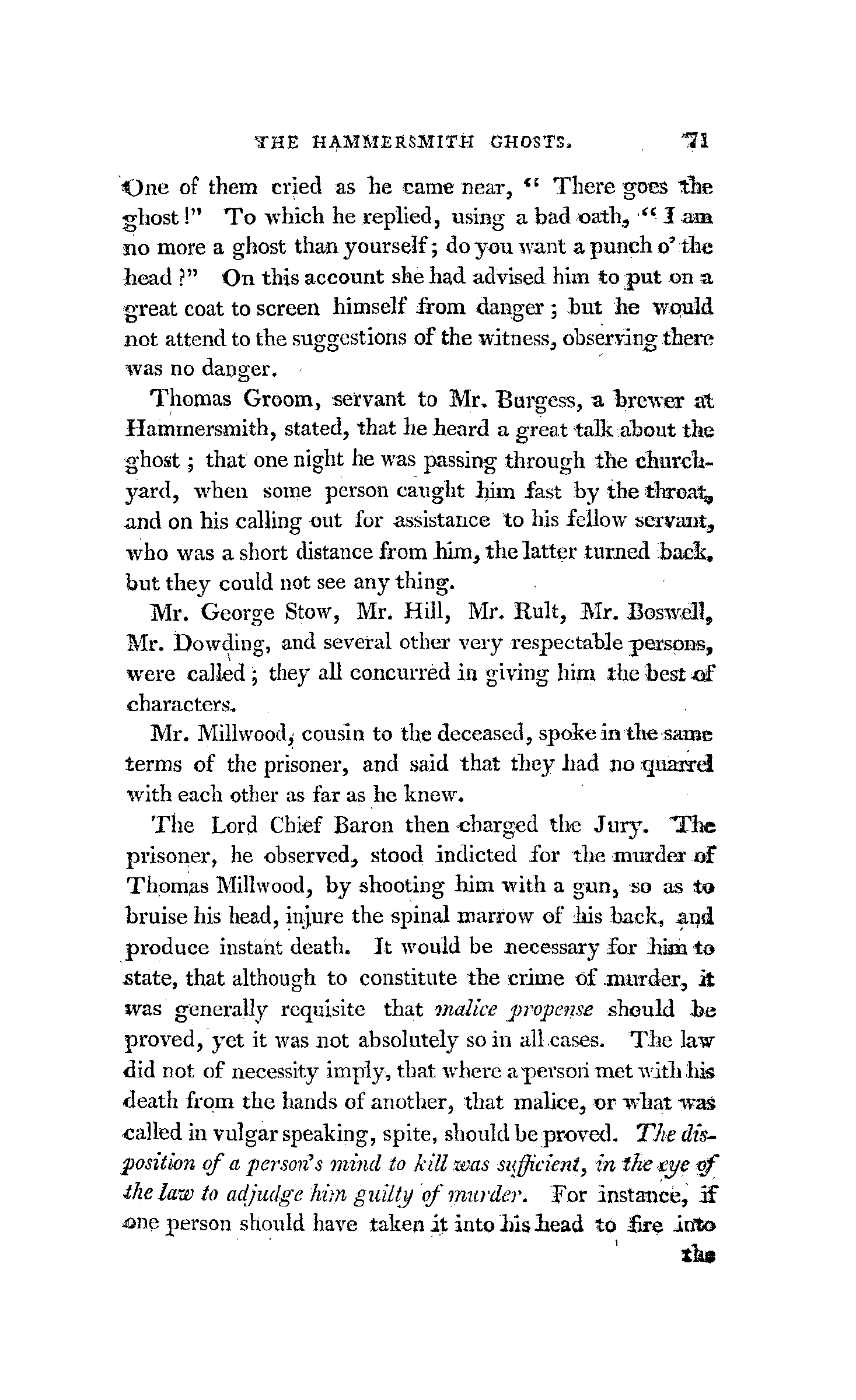
O n e of them cried as h e came near, * T h e r e goes t h e
g h o s t ! ” T o which he replied, using a b a d oath, ” I a m
n o more a ghost than yourself; do you want a p u n c h o* the
h e a d ?” O n this account she had advised him t o p u t on a
great coat to screen himself from danger ; b u t h e would
n o t attend to the suggestions of the witness, observing there
was no danger.
T h o m a s Groom, servant to M r , Bargess, a brewer a t
Hammersmith, stated, that he heard a great talk about t h e
g h o s t ; that one night he was pissing through t h e church
y a r d , when some person caught b i m fast b y t h e thcm%
a n d on his calling out for assistance t o his fellow servant;,
who was a short distance from h i m , t h e latter turned back,
b u t they could not see any t h i n g .
M r . George Stow, Mr. Hill, Mr. I t u l t , M r . Beswell,
M r . Dowding, and several other very respectable persons,
were called; they all concurred i n giving him t h e best
characters.
M r . Millwood, cousin to the deceased, spoke in t h e same
terms of the prisoner, and said t h a t they had n o quarrel
with each other as far as he knew.
T h e Lord Chief Baron then charged the J u r y . T h e
prisoner, he observed, stood indicted for t h e murder of
T h o m a s Millwood, b y shooting him with a g u n , so as t o
bruise his head, injure the spinal marrow of his back., a n d
p r o d u c e instant death. I t would be necessary for h i m t o
state, that although to constitute t h e crime of m u r d e r , i t
was generally requisite that malice jpropense should b e
p r o v e d , y e t it was n o t absolutely so in all cases. T h e law
did not of necessity imply* that where a person m e t with his
death from t h e hands of another, that malice, o r w h a t was
called in vulgar speaking, spite, should be proved. The dis-
position of a person?$ mind to kill was sufficient, in ffietye tif
the law to adjudge Mm guilty of murder. F o r instance, i f
4*ne person should have taken i t into Iris l e a d t o lire i n t o*i2 ?HE HAMMERSMITH £#om*
the very hall in which the Court was sitting, and kill £ttf
one in the Court, then he would be guilty pi murder. So^
in another case, if a person should shoot at one man and kill
another, he would b e equally guilty. T h e law would con
sider his disposition of mind, which was evidently to kill*
without having legal authority, just provocation, in self-*
defence, or in the absence of his reasoning faculty. T h e r e
yrere grounds of mitigation which would serve to lessen t h e
crime. His Lordship professed, that he could not, in t h e
case now before the Court for its consideration, distinguish
a n y one of these features of alleviation or mitigation;
therefore, if the prisoner at the bar, had taken away the
life of another, without authority, permission, or in d e
fence of his own life, then his offence went to murder.™
If it was not so, no one person could be safe. It would b e
in the power of any one to say, such and such a one has
committed some offence which I think deserves death, ancL
I will go and dispatch him. It would, indeed, be grievous
if such proceedings were to be tolerated—because some
wicked and malicious person, taking advantage of the cre
dulity which belonged to a great portion of mankind, had
committed a misdemeanour, in going about in an impious
manner, assuming the appearance of a supernatural agent,
was another person to s a y , ” I will go and deliberately
shoot that man -who frightens the peaceable neighbour-*
h o o d . ” Certainly not. All that he could be authorised to
d o , would be to apprehend him for that misdemeanour.—
Even if the very person appearing in this maimer as a
ghost had been killed, sugh killing was,murder. B u t here
a man thought he had a right to go and kill any person h e
saw in a light coloured coat. This was actually the case
with the prisoner at t h e bar. H e went out with a loaded
g u n , intending to kill, contrary to law, and killed a m a n
‘who was perfectly innocent. ” Gentlemen,” continued
44
his Lordship, I should be betraying my duty as a J u d g e ,
, and&hd acting contrary to the opinion of m y Brother J u d g e s
near me, if I did not tell you that this act of the prisoner’s^
provided you believe the facts given in evidence, amounts
to milling less than murder. In this case there was no a c
cident ; there was no sudden or violent provocation ; nor
was there any attempt made on the part of the prisoner to
apprehend the supposed ghost.—OHe went and thought
himself entitled to kill that person ; and with a degree of
rashness, which the law would never allow, he killed another
person. T h e crime would admit of alleviation or excuse,
and might be denominated manslaughter, if some of these
cases which he had before enumerated had occurred, naniely*
such as authority from the law, or self-defence. W i t h
what view the prisoner fired he knew not, but certainly it
was with a great deal of rashness. In his defence he had im-
puted his conduct to apprehension and fear; b u t what had
been the consequence $ the death of an innocent and u n
offending person. All the J u r y had to consider in the case,
was the veracity of the witnesses, if they believed them, they
would find the prisoner guilty. Whatever else might be
drawn from the ease was fit for a higher tribunal. His
Lordship then recapitulated the evidence for the prosecution
and the prisoner, and observed, that the character which
had been given of him would be of no avail here, however
painful, they must do their d u t y , and in conformity to the
sacred oath which they had taken, give a verdict according
to the facts laid before them, under sanction of the law.”
T h e J u r y retired for upwards of one hour, and on. their
return delivered a Verdict of—Guilty of Manslaughter.
T h e Lord Chief Baron informed them, that the Court
could not receive such a verdict, and they were bound b y
the solemn obligation which they had taken, to decide ac
cording to the facts. If they believed the evidence, their
verdict must be guilty; or ir they discredited the witnesses,
they would acquit the prisoner. T h e law he had clearly
%
Vox. II. L laidlaid down, and b y t h a t they must abide. It was not for
them to assume the K i n g ‘ s prerogative, and mitigate the
punishment.
Mr. Justice Rooke was of the same opinion ; and
Mr. Justice Lawrence enlarged upon the arguments of
the Chief Baron, saying the prisoner could have no right
to destroy Millwood. It was in evidence that the sister of
t h e deceased heard the prisoner call out to her brother t o
stop, or h e would shoot him, and immediately the gun was
discharged. T h e law laid down, that in cases of felony,
where a person stands charged as a felon, and proper per
sons are sent to apprehend him, and he escapes, after
being in custody, and runs away, and the party from
r
w hom he escapes .shoots and kills him, that person is
deemed, in the eye of the law, guilty of murder. Mr.
Justice Forster has laid it down, that if a person trips
another’s heels, and he thereby meets his death, then such
person is guilty of manslaughter; but if h e uses a deadly
weapon, then he is guilty of murder. In this case it was
evident that the gun was discharged so near that the g u n
powder blackened the unfortunate man’s face. T h e J u r y
were to recollect the oaths they had taken, and administer
that justice which the safety of society demanded.
T h e Recorder perfectly agreed in the doctrines laid
down b y the other Learned J u d g e s , and desired the J u r y
to reconsider their verdict, who, turning round in their
b o x , almost instantly pronounced the prisoner Guilty of
1
Murder. yT h e Lord Chief Baron told the J u r y , that he should r e
port the case immediately to his Majesty.
T h e Recorder thought the J u r y had very properly found
him guilty. T h e law of GOB, which ought to be written
in the hearts of all men, had declared, ” T h a t whosoever
sheddeth human blood, b y man shall his blood be s h e d . ” ^
H e then passed the usual sentence.
TheT h e prisoner stated his age to be 29. H e was dressed
in black, and conducted himself throughout the trial with
decent firmness. During the time he remained at the bar,
his countenance did not appear to express much agitation,
until the J u r y left the box. U p o n the return of the J u r y ,
h e appeared still more agitated; and particularly so, when
h e was pronounced guilty of murder. While the awful
sentence was passing upon him b y the Recorder, he s u p
ported himself with difficulty, and was led out of the Dock
b y Mr. Kirby’s assistant, overwhelmed with the horrors of
his situation. M r . D i g n u m , of D r u r y Lane T h e a t r e , sat
b y him, and was extremely affected ;Jhe wept, clasped his
hands together, and suffered the greatest agitation. Seve
ral of his relations were also present, and apparently in
great distress. . T h e Sessions House was crowded in every
part by nine o’clock, and the Yard was filled with an
anxious multitude, all making inquiry, and interested in
the fate of the prisoner.—He was as usual taken back to
N e w g a t e ; b u t at seven in the evening, a respite arrived
for him, till his Majesty’s pleasure should be known.
W i t h respect to the fate of this unfortunate man, though
we do not pretend to state our opinion against that of t h e
J u r y , the sentiments of the majority of the people, u n r e
servedly ascribe the respite of Smith, to the possible p r e
sumption in the breast of the J u d g e , that the J u r y , after
having returned a verdict of manslaughter against the p r i
soner, should have declared him riot guilty of m u r d e r ,
when they reconsidered the verdict.—And if the J u r y were
out an hour and twenty minutes in the first instance, when
they returned the verdict of manslaughter, the few minutes
they occupied the second time, when they brought in that
of wilful murder, must, to common apprehensions, appear
rather too short. However, having given in our preced
ing pages, a faithful detail of this important trial and sin
gular verdicts, we now proceed to a retrospective history
I* 2 ofof the circumstances some months preceding this cata*
strophe, containing the particulars of the persons engaged
in the imposition, and an impartial description of these dis
turbers of the public peace.
So far back as October last, it is well known, that the
first rumours of a ghost were in circulation in the neigh
bourhood, near the c h u r c h ; which is thus accounted for ;
I t Was then reported, that a ntad woman was in the
habit of disturbing the neighbours, b y perambulating the
church-yard and other walks/ in strange and uncouth
dresses, which, after a little time, was discovered b y Mr.
M o o d y , of the Six Bells, who-well knew his face, to be
nothing more than a youth belonging to Mr. Kilberton, a
neighbouring butcher, who, by way of frolic, and to plague
t?he maid his fellow-servant, had dressed himself in her
clothes, in which he frequently appeared in the church
y a r d and other places. Being reprimanded b y Mr. Moody
and others, and the ill consequences which might attend it,
pointed out, he desisted from the practice altogether.—
Notwithstanding, another supposed phantom soon sprung
t i p , and was seen all in white, at various places. This
ghost also was so clever and nimble in its retreats, that
they could never be traced, till one evening, when one
Jkazier, a chimney sweeper, going through t h e lower
part of Church-iane, and the night being very dark, he
was in his turn alarmed at the appearance of this supposed
s p e c t r e ; and as he related the story the next morning, it
seems he stood still some moments before he durst proceed.
However, having a stick in his hand, he extended it at
arm’s length, and advancing towards a tree, against which
h e saw the object, he was induced to exclaim—Ghost! or
whatever you may b e , pray be civil.—But as he still con-*
tinued advancing with a slow pace, instead of penetrating
a body of thin air, he found his stick in contact with the
clothes of a female, who proved to be a !V{is$ Q T T – T – , a
UU
. J9 S .yoking lady of Hammersmith, with her companion. After
this second discovery, nothing of the kind was seen or
heard of in this quarter, excepting what has been re
lated b y Thomas Groorn, a servant to Messrs. Burgess
and W i n t e r , brewers.—He, a stout able m a n , asserted for
a truth, -what he related upon the trial, of being nearly
choaked b y the rude caresses of one of the phantoms
which he met in the church-yard.-wHe did not keep his
b e d , as it is reported in the newspapers, b u t he was seve^
ral d a y s before he got the better of the fright,
A a old proverb says, T h e third time generally pays
for all Accordingly, the next disturber of the peace*
m a d e its appearance not in the church-yard, b u t lower
down, towards Beaver, Black Lion, and Plough and H a r
row Lanes, which served it as a retreat when pursued, from
the high road. A drummer belonging, to the Chiswick
Vo}unteers, an inhabitant of Hammersmith, and a ratr
catcher by his profession, was one of the first that was
panic-struck by this new speptre.—The next was a clerk
to Mr. Cromwell the b r e w e r , who thought he saw a super
natural appearance about five o’clock one morning an
Plough and Harrow-lane, and was considerably alarmed.
The pretended spectre, on Thursday the 29th of D e c e m
ber, made a more public appearance ; for as Girdler, the
watchman, came out of the house of Mrs. Samuel, N o . 2 ,
?
Queen s-place, adjoining Beaver-lane, an apprentice b o j
belonging to Graham the shoemaker, ran across the road
towards him, dreadfully frightened, at what he supposed to
be a ghost! In consequence of this, the watchman looking
towards the opposite side of the road, on the left hand of
the p u m p , ^vas witness to an object all in white. Ap~
1
proaching^ the spot where it stood, he observed some per
son divest himself of a sheet or tablecloth, he could not dis
tinguish which, wrap it up under^his coat, and-run away.
BeingBeing dark, this person was soon out of sight.—Girdler
followed, b u t saw nothing.—He therefore went to t h e
W h i t e H a r t , and inquired if any strange person was just
come in there.-—While Girdler was going by, the p r e
tended ghost, it is supposed, hid himself behind Mr. Hill’s
h o u s e ; b u t leaving the spot in Girdler^s absence, he was
seen b y some of Mr. Hill’s family, who observed a corner
of the cloth hanging below his coat.
W h i l e he stood near the p u m p , he was also, seen by a
Mrs. Steward, and her servant, at N o . 4 , Teresa Terrace,
who were much alarmed, till it was generally known, next
d a y , that the pretended ghost was an impostor. This last
appearance caused m u c h discussion ; and as it was a
species of imposition that had then been p u t in practice
three times successively, with very short intervals, it may
b e admitted, as a very powerful incentive to that provoca
tion, which Smith, as well as others, may be supposed to
have felt on the occasion; and which, no doubt, prompted
him to the commission of that rash act, which terminated
In the death of an inoifensive m a n , totally unconnected
with any impostor whatever.
A day or two after Smith was committed to prison, one
J o h n Graham, a shoemaker, who resides in Dorvelfs-row, t o
his shame, confessed that h e was the person, who, in the
last instance, on the 29 th of December, had dressed him
self in a sheet, as he said* to terrify his apprentice, who
had been in the habit of scratching the walls of the house,
and otherwise teazing his master’s children upon the sub*
j e c t of ghosts and apparitions.
A y o u n g woman, named Sarah Francis, servant to Mrs,
Brookes, of Westcroft-place, being at Graham’s house,
he j u d g e d i t to b e a • good opportunity to p u t his plan in
execution. Sending t h e boy home with her, with an in
tent t o meet him as h e came back, in his supernatural
xcapacity;
c a p a c i t y ; he dressed himself in the meanwhile for t h a t
purpose, and waited for the apprentice, in the manner re
presented b y our Engraving.—But this opportunity would
hot have occurred to him, had not the one armed postman,
who lodged in Graham’s house, been than in bed ; as he
generally had the office of seeing this young woman home
when she happened to come that way.—But though Gra
ham has acknowledged this to be his first offence, his
mind must, upon reflection, be considerably hurt, at what
has lately occurred.
This Mr. Graham, it is to be noticed, was known as a
serious person, a constant attendant, and one of the first
singers in Trinity Chapel, and’ always bore an excellent
character before.—We have since heard a rumour that he
means to leave his house ; and some circumstances having
transpired, have increased the dislike the foregoing affair
has naturally occasioned.
Among others, we are told, that a few days after the ex
hibition at the p u m p , Graham meeting Girdler, he said in
a jeering tone,. ” W e r e not you very much frightened the
t {
other night ?” T o which the other replied, No—he was
not—but whoever the ghost was, he will go to hell, die
when he w i l l ; ” and immediately left Graham to enjoy
his own feelings.-—But possibly, Mr. Graham might think
the pains he took, and his singing at the funeral of poor
Millwood, would be some reparation for the folly in which
he had been so deeply implicated. T h e report that a lady
of Brooke Green, had also died in consequence of the a p
pearance of a spectre, we are happy to find is totally un
founded ; she having received her fright from a person in
a state of intoxication. And the report of a figure dressed
in a skin with horns, together with that of cutting the traces
of the Hammersmith coachman’s horses, have no foundation
in f a c t ; but owe their rise to newspaper fabrication.
WONDER-- Kirby’s account reports that shoemaker John Graham confessed to dressing in a sheet on 29 December to frighten his apprentice. (contemporary_report).
- Kirby’s account describes more than one supposed spectre and rejects reports of a woman dying of fright and a horned skin-clad ghost as unfounded. (contemporary_report).
- Witness clock times and the two accounts of jury deliberation duration do not agree; the trial also leaves alleged earlier apparitions unresolved. (unknown_disputed).
- Kirby’s Hammersmith account says Millwood was going to fetch his wife from work at a house in the neighborhood; Ann’s trial testimony places her at Mr.Smith the out-rider’s, without naming her occupation. (contemporary_report).
- S03 · Francis Smith: linked life archive and indexed sentence outcomesThe Digital Panopticon
Research notes
Life archive obpt18040111-79-defend810 links six records. It indexes trial and death sentence on 11 January 1804, sentence respited 2 February 1804, and remission of prison sentence 12 July 1804. The latter two derive from capt18040111-79_389. Underlying register images have not been inspected; these are indexed outcomes, not proof of exact release date or a full year served.
- The Digital Panopticon indexes Smith’s sentence as respited on 2 February 1804 and remission of his prison sentence on 12 July 1804. (contemporary_report).
- S04 · Watchman’s box, 1800–1830London Museum
Research notes
Museum description: local parishes employed watchmen to patrol streets at night and keep order before the Metropolitan Police was created in1829. Object93.213 is from Holborn, not Hammersmith.
- Before London’s Metropolitan Police began in1829, local parishes employed watchmen to patrol at night and keep order. (fact).
- S05 · Background: Policing, The Night WatchLondon Lives academic project
Research notes
Historical overview: night watch patrolled specified streets, examined suspicious persons and brought offenders to a watchhouse. Most London watchmen salaried by1800; parish arrangements varied.
- London’s night watch patrolled streets, questioned suspicious persons and took apprehended offenders to watchhouses; local arrangements varied. (fact).
- S06 · Background: The Criminal TrialLondon Lives academic project
Research notes
Overview: judges, parties and lawyers cross-examined; judge summed up and jury returned verdict. Trial juries were male/property-qualified. Defence counsel could not address jury fully until1836.
- Late eighteenth-century Old Bailey procedure gave judges an active role in questioning and summing up; the jury returned the verdict, and jurors were men meeting property qualifications. (fact).
- S07 · Jury ServiceAdministrative Office of the U.S. Courts
Research notes
Federal-court civic explanation: jury decides facts under principles of law explained by judge. This is a broad federal comparison, not a statement of every modern state rule or permission to direct conviction.
- In modern U.S. federal jury trials, the jury decides facts under legal principles explained by the judge. (fact).
- S08 · The Gun Licence Act1870,33&34Vict.c.57UK legislation original text
Research notes
Original1870 Act creates excise duty on licences to use guns, with specified exceptions including military/volunteer/police duty and game licence holders. It postdates1804 and does not establish that every form of gun possession/use in1804 was unregulated.
- The Gun Licence Act1870 introduced a gun-use excise licensing measure decades after the1804 shooting; it must not be applied retroactively to Smith’s night. (fact).
- S09 · Volunteers’ Exemption Bill debate,13December1803Historic Hansard, UK Parliament
Research notes
Contemporary debate records concern that Stafford volunteers lacked firelocks, and Secretary Yorke said orders had been given to provide volunteer arms, with maritime counties prioritized. National context, no identification of Girdler’s particular gunshots.
- In December1803 Parliament was discussing provision of firearms to volunteer corps; this is national military context, not an explanation of the specific shots Girdler heard. (contemporary_report).
- S10 · View of Epworth RectoryMuseum of Methodism & John Wesley’s House
Research notes
Museum describes reported1716–1717 knocking disturbances in the Wesley family’s rectory and belief in OldJeffrey. English religious-household comparison earlier than Hammersmith; no claim Hammersmith residents shared one denomination or had read this account.
- The Wesley family’s reported1716–1717 rectory disturbances, known as OldJeffrey, provide an earlier English religious-household example of ghost belief; they do not establish the beliefs of any named Hammersmith witness. (contemporary_report).
Have a correction or family document?
Send a private research note for review. Nothing you submit appears publicly. For documents, share a reference or public source link; file uploads are not accepted.